How long food really lasts in the fridge
A crisp, source-backed guide to fridge times, why they differ, and when to freeze to cut waste.
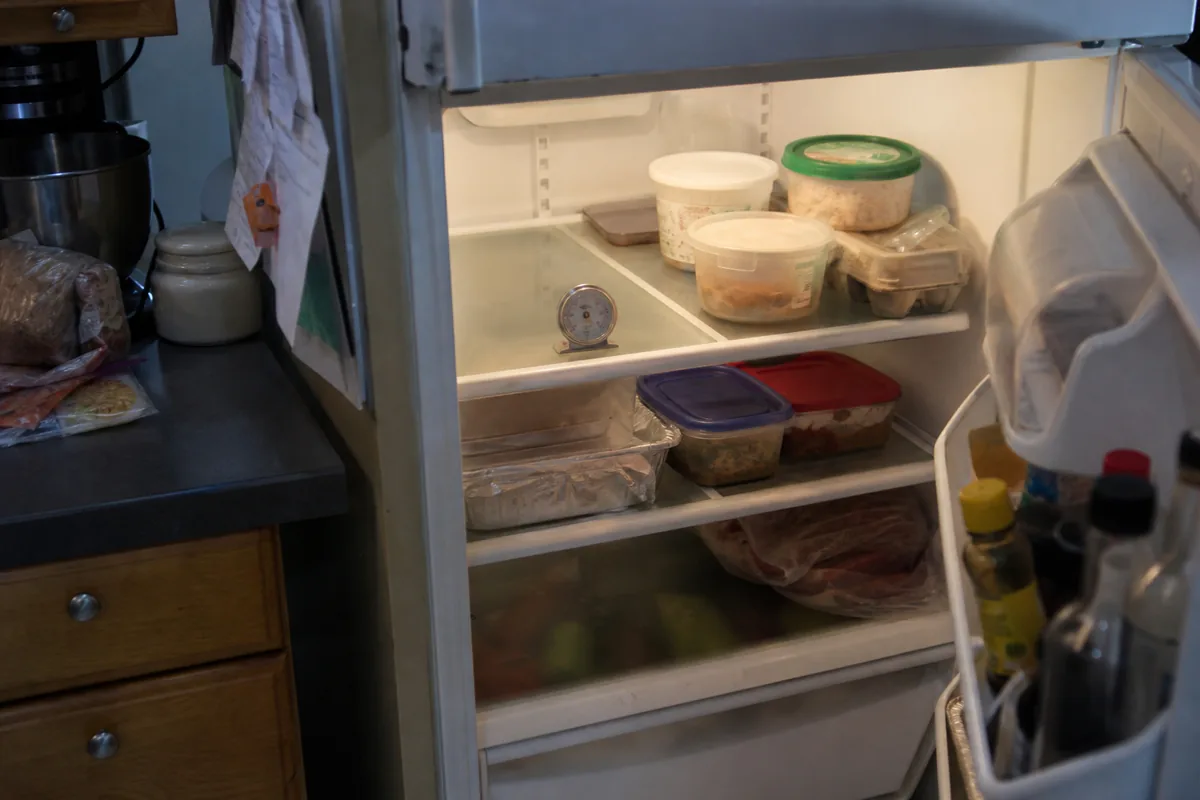
How long does food last in the fridge? Here are the key times that matter, straight from federal food-safety sources, plus when to freeze to save money and avoid waste.
Your quick fridge guide
Raw ground beef. USDA FSIS says, "If refrigerated, keep at 40 °F or below and use within one or two days."
Cooked leftovers (meat, poultry, seafood). USDA FSIS says, "After cooking, meat, poultry and seafood can be safely stored in the refrigerator 3 to 4 days."
Shell eggs. USDA FSIS says, "After the eggs reach home, they may be refrigerated 3 to 5 weeks from the date they are placed in the refrigerator."
Hot dogs. USDA FSIS says, "If there is no product date, hot dogs can be safely stored in the unopened package for 2 weeks in the refrigerator; once opened, only 1 week."
Opened deli meats and wrapped fresh meat. USDA FSIS says, "Fresh meat in foam trays and shrink-wrap, and opened packages of luncheon meats may be refrigerated at 40 °F or below for three to five days; ground meats, poultry and variety meats, one to two days."
Fridge and freezer temperatures. USDA FSIS says, "Always store perishable foods in the refrigerator at 40 °F or below or in the freeze at 0 °F or below."
The two-hour rule. USDA FSIS says, "Always refrigerate or freeze perishable food within 2 hours of purchasing. Refrigerate within 1 hour when the temperature is above 90° F (32.2°C)."
Freezer safety baseline. FoodSafety.gov says, "The guidelines for freezer storage are for quality only—frozen foods stored continuously at 0°F (-18°C) or below can be kept indefinitely."
Why times differ
Refrigeration slows bacterial growth. It does not stop it. USDA FSIS puts it plainly: "Refrigeration slows but does not prevent bacterial growth. Therefore, it is important to use food in a timely fashion before it spoils or becomes dangerous."
Some foods are riskier because of surface area. Ground beef has more exposed surface than a steak. That is why it carries a shorter refrigerator time.
Salt, acidity, and moisture also matter. Cured and drier items often last longer. Moist, mild foods spoil faster.
Cold is not a guarantee against all pathogens. The CDC notes, "Listeria can grow on foods kept in the refrigerator." That is a key reason to limit time for opened deli meats and ready-to-eat items.
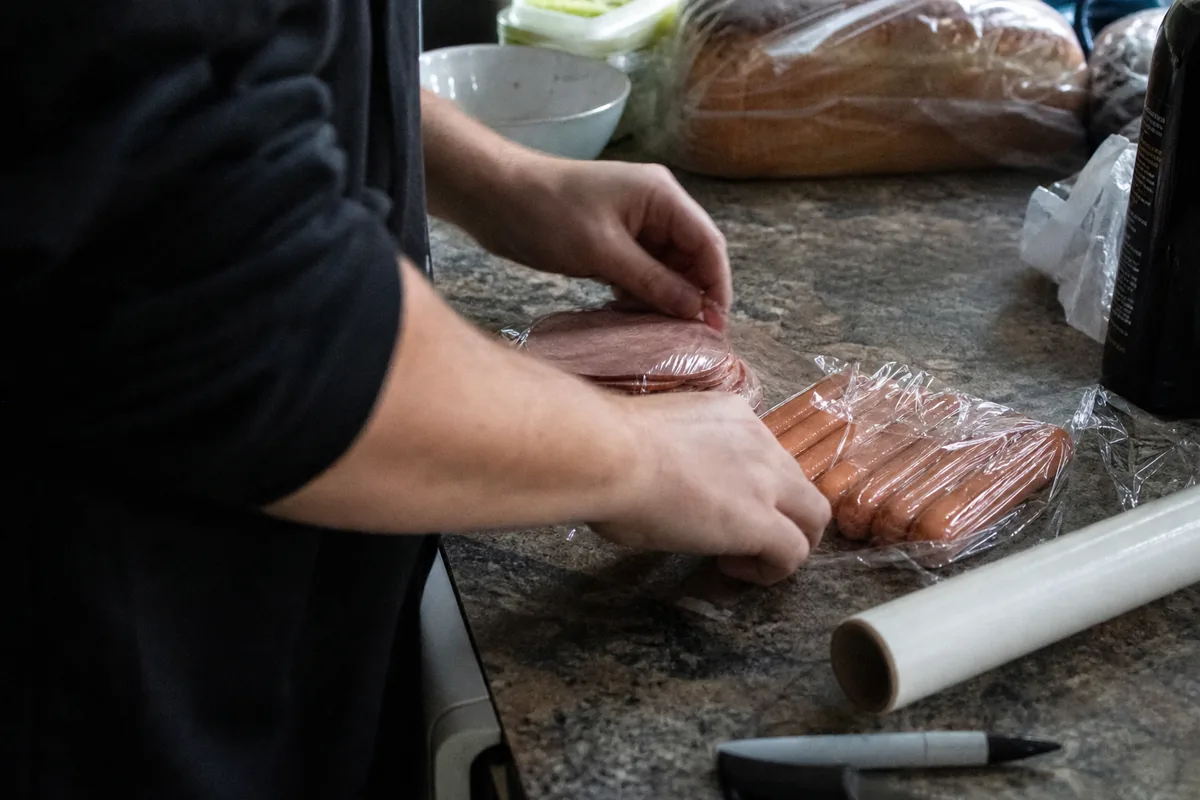
Use the freezer early to prevent waste
Freezing stops bacterial growth. Safety at 0°F is not the problem. FoodSafety.gov states, "The guidelines for freezer storage are for quality only—frozen foods stored continuously at 0°F (-18°C) or below can be kept indefinitely."
That fact supports smart bulk buying. Freeze portions you will not use soon. Label and rotate them. Quality slowly declines in the freezer, but safety holds when the temperature stays at or below 0°F.
Plan the week with the sell-by window in mind. USDA FSIS advises using or freezing beef, veal, pork, and lamb within 3 to 5 days of purchase. It advises using or freezing chicken, turkey, ground meat, and ground poultry within 1 to 2 days of purchase. That means a freeze-by-day-2 habit for poultry and ground meats.
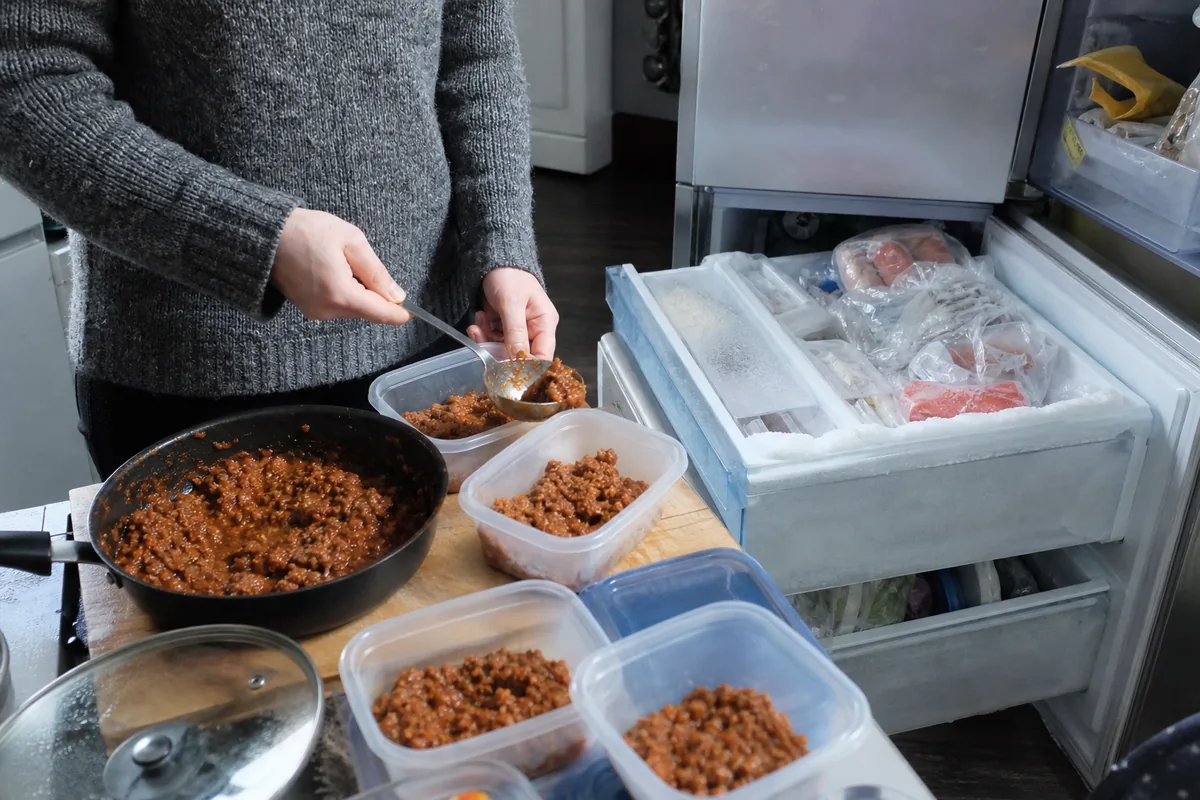
Set up your fridge to keep food safe and reduce waste
Check temperature with an appliance thermometer. Keep it at or below 40°F, per USDA FSIS. Cold air needs space to move, so avoid overfilling shelves. Store raw meats on a tray to catch drips. Keep ready-to-eat foods above raw items.
Use small containers for leftovers. Shallow containers cool food faster. That protects quality and safety. Label containers with the cooked date. USDA FSIS says cooked meat, poultry, and seafood can be stored 3 to 4 days.
Make freezing a midweek tool, not a last resort. If plans change, freeze cooked foods while quality is high. Package flat, in meal-size portions, so thawing is quick and even.
What date labels really mean for safety
Store dates and display codes are about stock rotation, not automatic safety. What keeps food safe is time plus temperature control.
Respect the two-hour window from USDA FSIS. Get perishable foods cold within two hours of purchase. When the temperature is above 90°F (32.2°C), refrigerate within one hour.
At home, lean on the sell-by guidance when deciding what to cook first and what to freeze. USDA FSIS advises using or freezing beef, veal, pork, and lamb within 3 to 5 days of purchase. It advises using or freezing poultry and ground meats within 1 to 2 days.
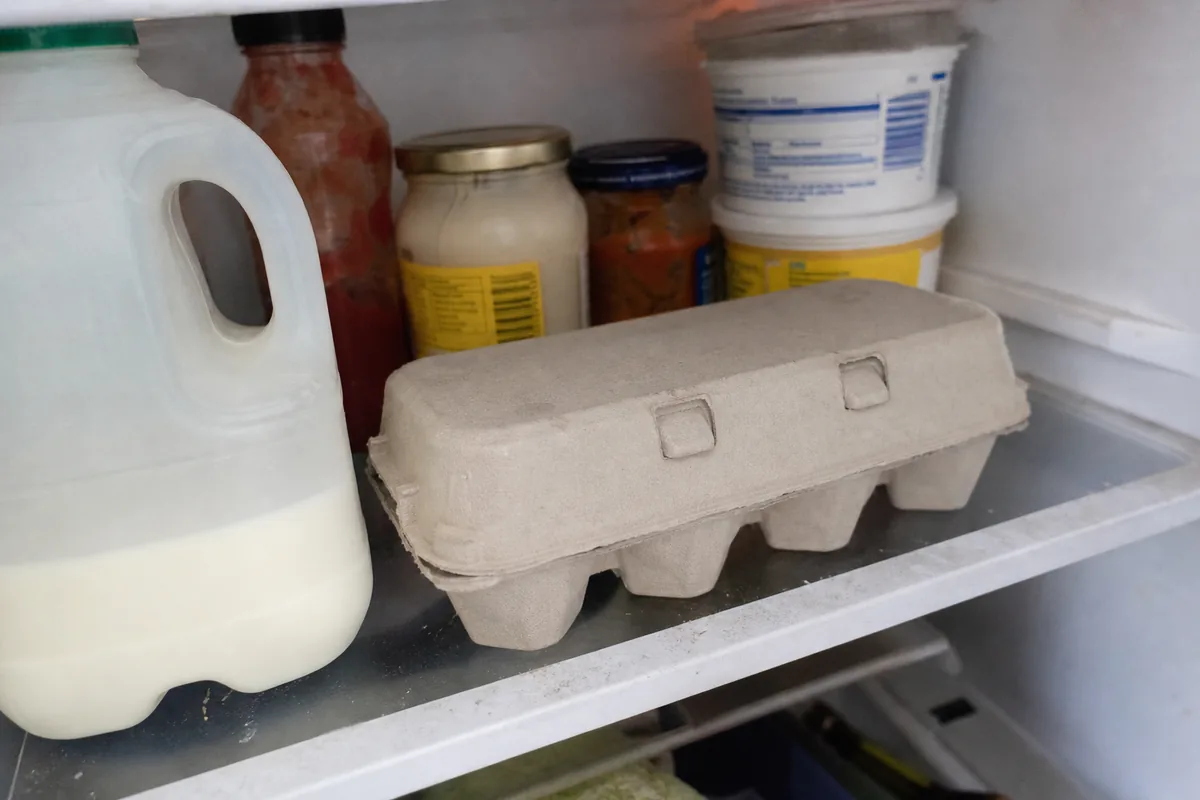
Bottom line
The fridge buys time but does not stop growth of germs. Times differ by food and handling. Use the USDA FSIS and FoodSafety.gov figures above. Keep the refrigerator at or below 40°F. Get food chilled within two hours. Freeze early for longer quality and less waste.
Sources
- USDA FSIS – AskFSIS: How do you store ground beef at home?
- USDA FSIS – AskFSIS: How long can I keep meat in the refrigerator?
- USDA FSIS – AskFSIS: What kind of dates are on cartons of fresh eggs?
- USDA FSIS – AskFSIS: How long can you keep hot dogs?
- USDA FSIS – AskFSIS: How long can meat and poultry be stored in various packaging?
- USDA FSIS – AskFSIS: At what temperature should perishable foods be stored?
- USDA FSIS – AskFSIS: What are some food safety tips when shopping for food?
- FoodSafety.gov – Cold Food Storage Chart
- CDC – Listeria Outbreak Linked to Meats Sliced at Delis
- USDA FSIS – AskFSIS: How long is meat or poultry safe to use after the sell-by date?