How long food really lasts in the freezer
Freezing keeps food safe at 0°F. Quality has a clock. Here are the windows that matter, how to pack to beat freezer burn, and what to do after an outage.
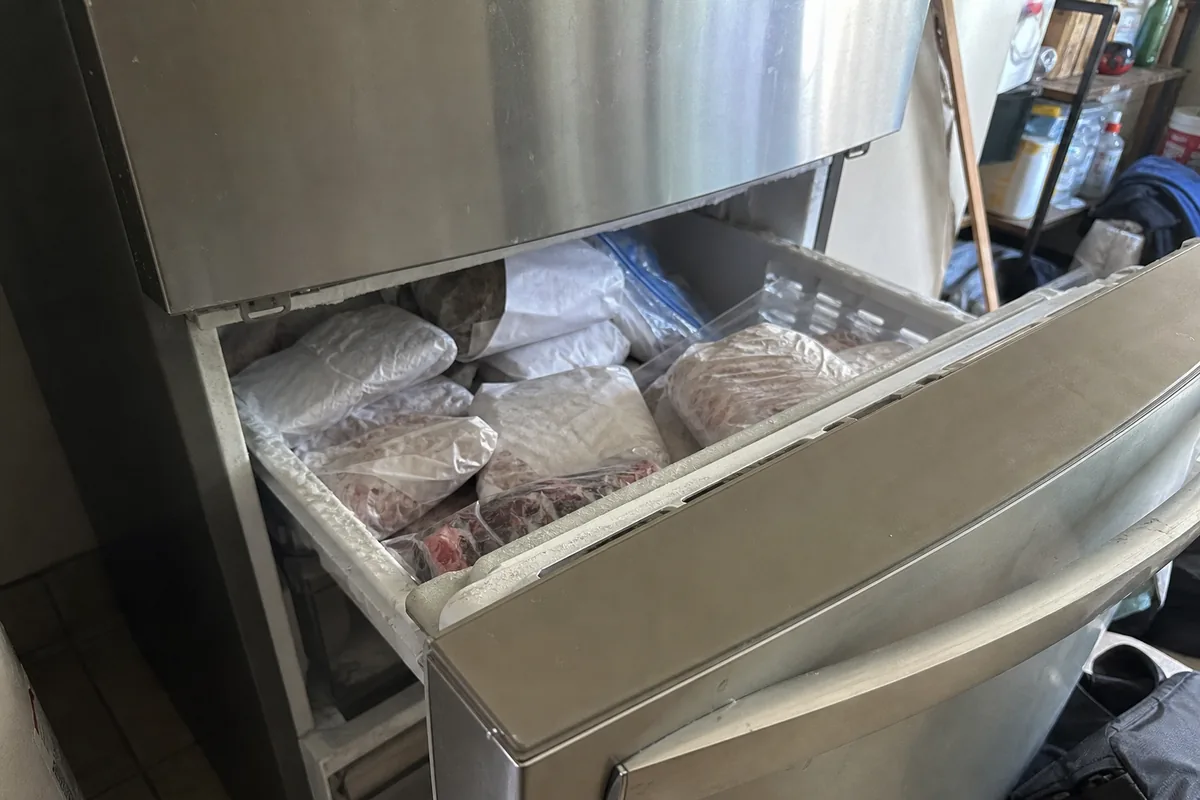
Consumers ask one thing: how long does food last in the freezer?
FoodSafety.gov answers with a core rule. "The guidelines for freezer storage are for quality only—frozen foods stored continuously at 0°F (-18°C) or below can be kept indefinitely." That is the safety line. Quality is separate.
The two clocks: safety and quality
Freezing stops microbes from doing damage. The USDA’s Food Safety and Inspection Service says, "Freezing to 0 °F inactivates any microbes, bacteria, yeasts and molds present in food." That is why food held at 0°F stays safe.
Quality still fades over time. Texture can dry out. Flavors can dull. Keep the freezer cold and steady to slow that drop. FSIS puts it simply: "To store frozen foods at best quality, keep the freezer set to maintain zero (0 °F or -17.8 °C)." ENERGY STAR aligns with that: "Keep the temperature at 0 degrees Fahrenheit."
Quick quality windows for common foods
These are quality windows from FoodSafety.gov’s chart. They assume a steady 0°F. The foods remain safe beyond these times, but taste and texture may suffer.
Ground meats, including ground poultry
FoodSafety.gov lists hamburger, ground beef, turkey, chicken, other poultry, veal, pork, lamb, and mixtures. It gives 1 to 2 days in the fridge and 3 to 4 months in the freezer for best quality.
Whole chicken or turkey
For whole chicken or turkey, FoodSafety.gov lists 1 to 2 days in the fridge and 1 year in the freezer for best quality.
Chicken or turkey pieces
For chicken or turkey pieces, FoodSafety.gov lists 1 to 2 days in the fridge and 9 months in the freezer for best quality.
Cooked meat or poultry leftovers
For cooked meat or poultry leftovers, FoodSafety.gov lists 3 to 4 days in the fridge and 2 to 6 months in the freezer.
For poultry shoppers planning stock-ups, FSIS echoes these ranges in the FoodKeeper guidance: "For best quality, taste and texture, keep whole raw chicken in the freezer up to one year; parts, 9 months; and giblets or ground chicken, 3 to 4 months."
Again, these are quality clocks. As FoodSafety.gov states, the safety clock at 0°F does not end.
If the plan is to thaw and hold in the fridge, pair these windows with refrigerated timelines. See the full guide to how long food really lasts in the fridge.
Packaging to beat freezer burn beyond two months
Freezer burn is dehydration. Air reaches the surface and dries it out. FSIS makes the safety point clear: "Freezer burn does not make food unsafe, merely dry in spots."
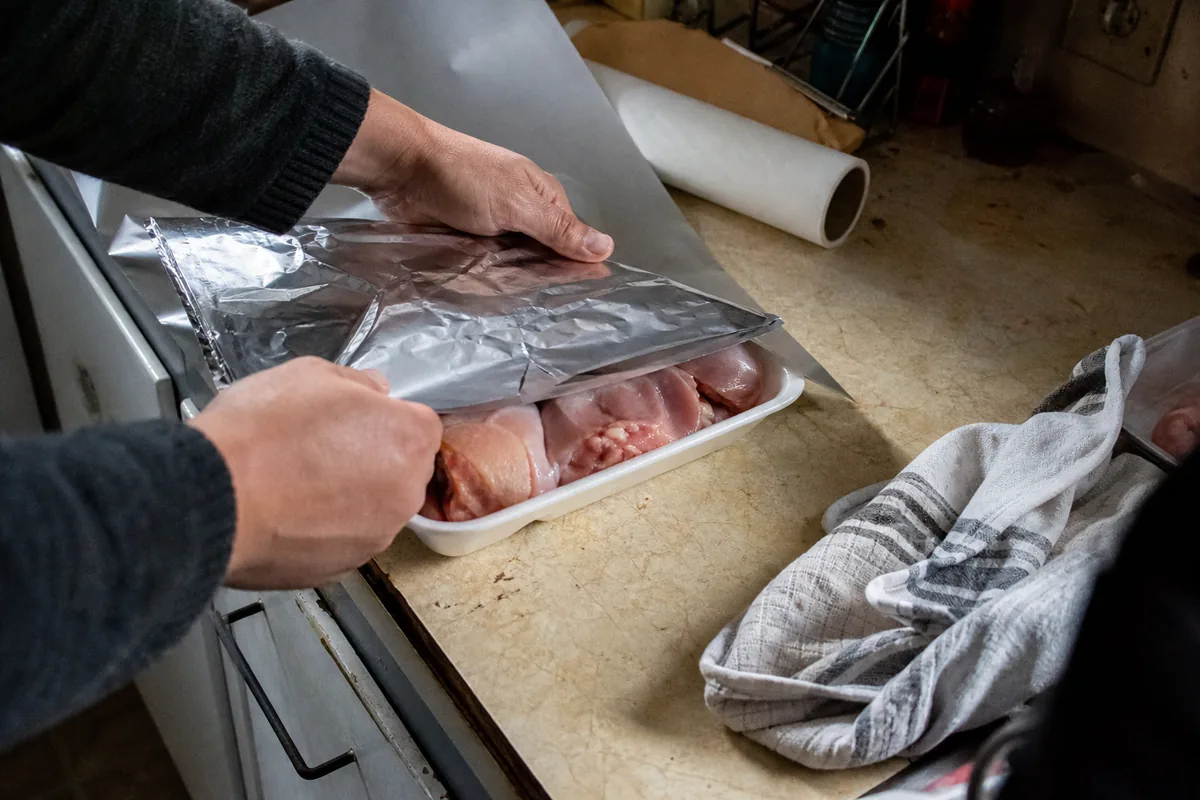
Air is the enemy. For storage past two months, FSIS advises stronger wraps and bags. Their guidance is direct: "If freezing longer than two months, over wrap the porous store plastic packages with airtight heavy-duty foil, plastic wrap or freezer paper, or place the package inside a freezer bag."
For best results, use these steps
- Chill food in the fridge first so it freezes faster.
- Portion into meal-size packs to reduce thaw cycles.
- Wrap tightly. Push out as much air as possible.
- Add the FSIS overwrap or a second freezer bag for long stays.
- Freeze flat so pieces stack and thaw evenly.
- Label with the food and freeze date. Keep the label facing out.
Good packaging protects texture. It also makes organizing easier, which reduces door-open time.
Outages and refreezing: the simple rules
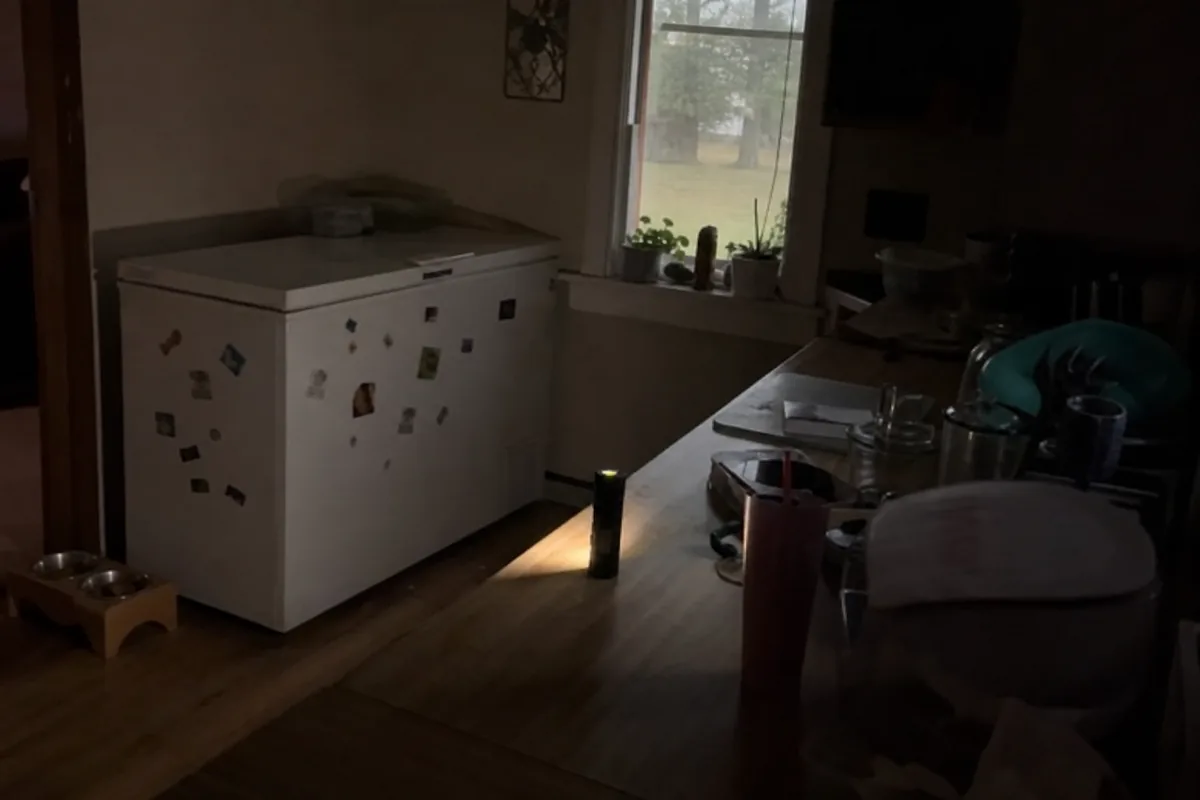
A closed, cold freezer buys time. FoodSafety.gov states: "A full freezer will hold a safe temperature for approximately 48 hours (24 hours if it is half full and the door remains closed)." Keep the door shut to trap the cold.
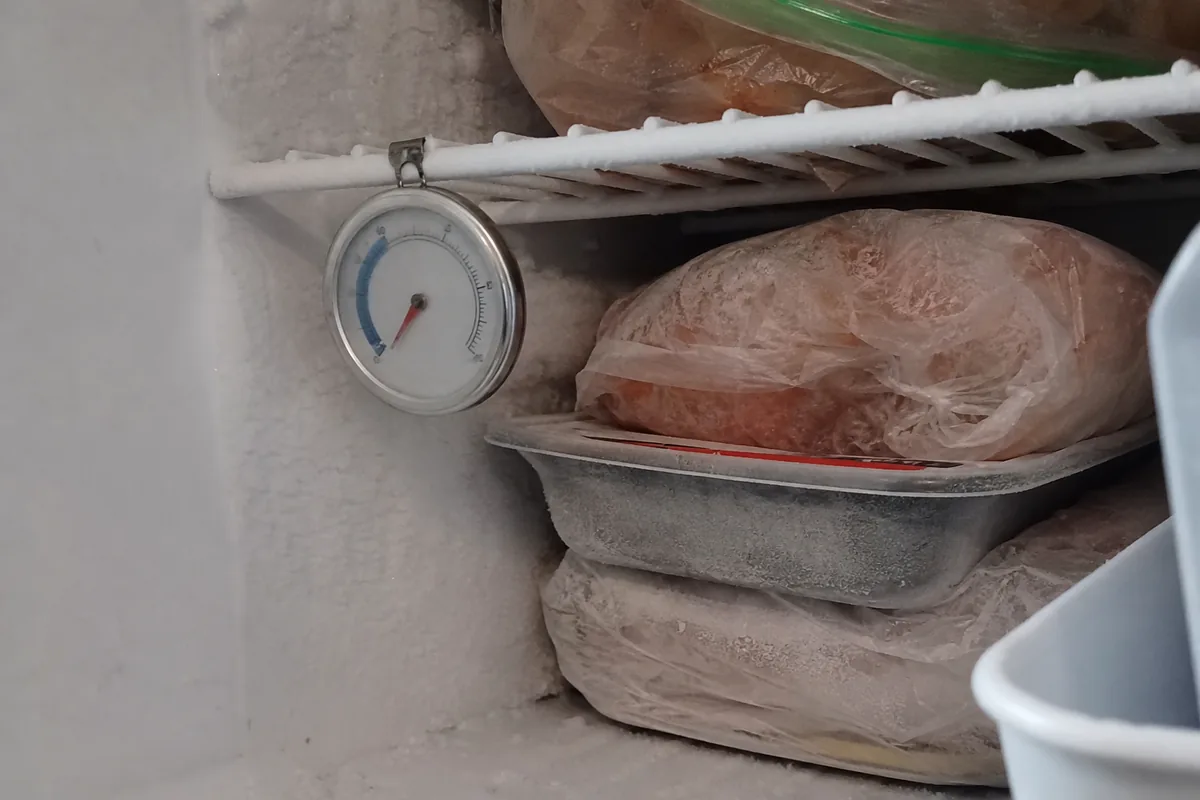
After a thaw or partial thaw, FSIS sets the refreeze line. "Food may be safely refrozen if it still contains ice crystals or is at 40 °F or below." Ice crystals mean the core stayed cold. When in doubt, check. A small freezer thermometer inside the unit helps you see if it stayed at 40°F or below.
If food is above 40°F and fully thawed, cook it now. Then follow the cooked leftovers quality window from FoodSafety.gov: 3 to 4 days in the fridge and 2 to 6 months in the freezer.
Save food and energy together
Cold and steady saves both food and power. FSIS says, "To store frozen foods at best quality, keep the freezer set to maintain zero (0 °F or -17.8 °C)." ENERGY STAR gives the same target: "Keep the temperature at 0 degrees Fahrenheit."
Plan freezer dives. Group foods by type so you can grab and go. Keep an updated list on your phone to cut search time. Fewer open-door minutes means fewer thaw cycles and better quality.
Rotate stock. Put new items in the back or bottom. Pull older packs forward. Use the shorter quality windows first, like ground meats.
Freeze with a plan. Portion meats for quick meals. Freeze cooked extras in flat, labeled bags. That supports the leftovers window and avoids waste.
Safety stays steady at 0°F. Quality holds longer when the temperature is right and air stays out.
Sources
- FoodSafety.gov — Cold Food Storage Chart
- USDA FSIS — What is freezer burn?
- USDA FSIS — What is the right temperature for the freezer?
- FoodSafety.gov — Food Safety During Power Outage
- USDA FSIS — May I refreeze the food in the freezer if it thawed or partially thawed?
- USDA FSIS — Does freezing food kill bacteria?
- USDA FSIS — What are suggested refrigerator storage times for chicken?
- ENERGY STAR — Freezers: Freezer Usage Best Practices
- USDA FSIS — How long can you freeze chicken? (Ask USDA)